Cognition X on the challenges of applying AI in Health #GiantHealthEvent

Healthcare is rapidly becoming the biggest market in AI. The opportunities are enormous.

Prescriptions, Surgery, Diagnostics, Drug discovery and Nursing will all be involved.

The big challenges are: Acquiring enough data, navigating regulation and privacy are the main obstacles slowing down progress here.

cognitionx-logotype-default

Zero knowledge: minimising the number of systems who have a full view of anything.

Cognition X already has 500 AI related products listed. They provide a vertical search engine for AI to find the right machine learning tools.


GE: New Thinking in the Digital Health Ecosystem: Breaking down the silos #GiantHealthEvent

No company or individual is a silo. The internet has changed everything and it is all now connected

download-6

But what will happen when 50 billion machines become connected? Suddenly the data will show us the flow in the hospital, the results will be highlighted. The computers can detect problems and fix them.

seattle-childrens-hospital-turns-big-data-into-better-care-6-638

This is the collision of the physical and analytical, brilliant machines with industrial amounts of data and people interacting with them.

We are heading towards a ‘colossal clash’ between the consumer health technology and clinical healthcare. The two worlds are both merging but also on a collision course with one another.

accenture-colossal-clash-digital-health-disruptors

We are heading to an age where we want to rate everything. This is a consumerisation of healthcare. It will become the norm to rate your doctor online.

In the future nothing will be redundant. Everything will be rankable and in flux. We are heading towards an outcome driven world.

download-7

This is why GE are creating an open ecosystem cloud to host health applications because there is going to need to be a way to scale innovations quickly. This can provide a portal for developers to test their products quickly and get feedback.

There is no going back. Things are moving fast and GE want to be ready.

Cognitive Computing in Healthcare – IBM Watson #GiantHealthEvent

The term AI tends to bring up negative connotations. IBM prefer the term cognitive computing now.

download

Watson is a service – built to be consumed. It understands, it reasons and then learns.

Watson has no biases but rather creates answers based on evidence.

IBM believe that care is delivered in an archaic way and there are much better ways to deliver it. They see medicine as experts drawing on the experience of generally just one person and they feel that there are going to be better ways to come to clinical decisions.

A computer human team if you like.

r_239

atson can help to structure data. It can then analyse and rank that data and provide various different options. They feel that the MDT process can be greatly improved because at present decisions are often made my the most senior people rather than taking in the evidence from all the different perspectives.

clinicaltrialsposter_new

Another area they are working in is clinical trials and patient matching. The final major area they are looking at is genomic insights.

The example was given of protein discovery. The Baylor team managed to find 6 new proteins using Watson in only 30 days of use. Prior to this 28 protein targets had been discovered in the past 30 years.

huwimzmf

IBM’s next plan is to further open up the Watson API to enable teams to work together on projects.

The legal challenges and #opportunities for #disruptors in the healthcare sector

index

Digital health has become a much bigger legal sector than it ever was before. This is because consumer products, telecommunications and health are already heavily regulated sectors.

It has resulted in a fragmented market. Some are very innovative but have missed out some of the regulations that apply. This has led to many discussions related to the regulation of mobile health apps and greater scrutiny. What is a good quality product?

Consumer laws

A lot of entrepreneurs have low levels of legal awareness in some areas. The general laws are:

Data protection, Consumer protection, Copyright protection, distance contracts, soft laws, medical devices directives (for medical apps).

Consumer Protection

Part of the problem is differentiating between medical apps and non-medical apps. Both will have different regulatory mechanisms and laws governing them. Either way you need to get proper consent for whatever data you collect.

Medical devices: these need to serve a medical purpose. They need to be CE marked and they need to be registered with regulatory authorities. You need to be clear about this from the outset. The key thing is actually promotion. If your business case is based on the medical claims made about the product then it is likely to be recognised as a medical device.

Consumer products: These don’t have to be CE marked or tested. The impact of consumer protection legislation has to be clear here. Health or fitness apps fall under this group. This means they are NOT making medical claims. Again you have to be careful about the marketing. The way you market the product will affect how the regulators will perceive it. There are certain disclaimers and product liability options which need to be considered.

The medical device guidelines are out of date and need to be updated. More guidance is forthcoming and the regulators are gradually catching up. Again the key is how the product is marketed.

This is so important and often underestimated by entrepreneurs. MHRA guidance

If your product is low risk and aimed at general wellness/fitness then the regulators are unlikely to be very concerned about it.

Once you get down to a particular disease it gets a bit more tricky. However, if the advice remains general and broad again it is probably acceptable and outside the FDA guidelines. Especially if it is in a low risk group and area.

Data Protection

The data you obtain is likely to be very tightly controlled. Therefore there needs to be a disclaimer, terms and conditions and consenting. Is this valid and meaningful or explicit? You have to be careful how you collect the data, and how you store and manage it. This applies whatever the data might be, especially if it might be construed as personal.

There was a recent court case in Holland where they took Nike to court because it didn’t have explicit enough consent to use the data in the app. The court determined that Nike was in breach of data protection laws because it was processing personal data without consent (on peoples fitness).

You need to consider how and where you will place these. There should be a number of places where it is presented. There has been a recent privacy code of conduct approved by the european court. It is voluntary but if you apply it then you can leverage that as a potential marketing advantage.

How to recruit top talent for your startup

gandalf

Based on a talk by Salus digital. (Healthcare recruitment company)

You have to plan. Don’t just recruit because someone is putting pressure on you.

Ask yourself – what will you gain by recruiting? -are you ready?

If not the person will leave quickly because they will see there is not structure / role for them and they won’t feel they fit.

What do you actually need? Do you have a budget for that? Healthtech is an extremely competitive market. If you want someone good you need to pay for it.

Also do you need to be willing to take a risk? or do you want someone defined? The person with the skills you need (particularly if they are soft skills) might not be exactly who you expect.

A £30k employee will actually cost you nearer £50k because of national insurance and various other costs. Do you have enough runway to allow you to see that gain they will bring?

The corporate sector has deep pockets. However, a startup can beat them when it comes to purpose, culture, learning and development and teams.

You need to create a compelling story. What is the EVP (extended value proposition), what are your core values?

You need to stand out from the crowd.

Ask yourself?

Are the core values of the employee in tune with your core values.

Tony Zappos (delivering happiness). He coined the term ‘core values’ and core value proposition. Amazon bought his company for a billion dollars.

Where can you find these people?

You need to attract your own network and exploit network effects. Be careful with those you know personally or are connected to your business somehow. If it doesn’t work out this can be very awkward.

Then you can go to an agency. Go to a specialist. It will cost you money but this will get you access to their network. It will cost you 20-25% of that persons first year of salary!

Advertising is another option – monster etc. LinkedIn. The challenge is to make it specific. Niche skills are important.

The corporate world is full of ‘talent acquisition specialists’ they go through LinkedIn to try and find people and recruit them.

Interview

It’s so important to make a great first impression as a company. That employee will make a decision based on what they see. Have you got the right structure, is there an employee pack with all the info on the background, founders, vision, personal development programme, etc.) That will give an amazing first impression.

The structure of the interview needs to be planned. You have an hour to find out what they have achieved, what figures do they have, examples, test the candidate and let them test you! Sell the opportunity. It’s a buyers market, but don’t oversell it!

What are the timescales? Set them out clearly. When will the first interviews be? When will the second interviews be? Run it professionally and avoid running the risk of losing that person.

Offer your best

Stick with your plan, don’t under offer. If you promise 35k and then offer 30k at the last minute you will demotivate that person and even if you get them they will be demotivated. Offset salary with options. Staggered increases.

Stay in touch, invite them socially to other events. Invest in them before they even get there. Communicate with them and get them involved even if they haven’t yet started. Communicate as much as possible.

Then Celebrate!

Retaining Talent

It is really hard! There is so much going on, so many carrots being dangled everywhere. You have to work at it. Engage them from day one. Induction pack, plan, Zappos offer. Reward achievement, continued professional development, core values. Zappos would offer every new starter £2,000 to leave at the start. 97% don’t take it.

Core Values

Some examples: Create an environment that makes employees feel like an asset, make expectations and goals clear, create an open and honest work environment, provide opportunties to grow and learn, recognise and rewards hard work etc.

The SME advantages

  • Corporate obstacles
  • Agility
  • Low internal politics (this is very attractive)
  • Embrace core values
  • Achieve the vision
  • Sharing success

The culture is often actually real in a startup. These advantages are MASSIVE. Don’t underestimate them.

This was based on a talk by Paul Budd at Salus digital. Talk given at the first ever GIANT health event.

Protecting Your #Intellectual #Property

Protecting your valuable IP.

download-1

How to do it cost effectively and avoid the downsides.

Most of companies value is in intangible assets. Ideas themselves are not protected. Only the expressions of these in the form of being committed are protected.

Any purchaser is going to want to see IP protections in place. In the US they put budgets aside for this from an early stage (they see it as crucial).

It is an opportunity. It gives you legal protection for your product. It allows you to create and exploit products and markets without other people coming along and exploiting your product or idea. It also helps you to flush out the risks early on so you can pivot early.

Perceived problems include:

  • Lack of information / expertise
  • Cost – of acquisition and enforcement
  • Easy to ignore it – or put it off


A Menu

It is a menu of opportunities. Start with the lower cost, easy, organisational steps and measures.

From that platform consider other options based on:

  • what and where are the markets?
  • how long will it / your product last?
  • what real protection will it provide?


In roughly ascending cost order

Copyright

Copyright is cheap but it can be an asset as soon as it is protected. Primary question is – do you own it?

If you or an employee create something it’s yours – you are the first owner. If not then it becomes very complex. The contractual arrangements need to be watertight.

Use the symbol!


Trade Secrets

Don’t give it away. Reinforce confidentiality amongst those in the know

NDA’s


Trademarks

If you think it will grow long term then protect the name. It is the one form of protection that lasts forever.


Designs

Register them and they are protected. Cheap and generally underused.


Clearance

Beware other people might be there first. Search costs can be high but it depends what you are trying to do.


Patents

Protects the technology at the heart of the invention but it takes a lot longer to build. You also need to disclose your invention to the world in order to obtain a patent. The average cost in the UK is around £5,000-10,000 to file and protect a patent for 20 years but the range is enormous.

Keep all the contacts, records and documents in a safe place. Then if you get into a conflict you will have done all the due diligence and will be ready to prove your case. Tight confidentiality agreements are important. Don’t let IP take a back seat.


Investing and Tax options

SEIS (seed enterprise investment scheme) and EIS (enterprise investment scheme) are tax incentives for those investors who are willing to take a risk on smaller/riskier trading companies.

These tax breaks are to try and plug the gap for smaller enterprises.

tax

SEIS means an early stage company can raise up to £150,000. EIS is available to larger/more advanced companies and can follow and SEIS investment.

There are detailed qualifying criteria. The tax breaks are very good particularly for the seed stage investments but they HAVE to be in exchange for equity.

Deductions from income tax equal to 50% deduction from their income tax bill. They have to be for shares. Annual investment limit is £100,000. For EIS it is up to a million at 30%.

If the shares have been held for over 3 years then capital gains tax does not apply. If they make a loss that loss can be used to set against the income tax bill.

SEIS: The only capital at risk from £100,000 is actually £17,500


Under EIS: £38,500 from the same size of investment.

They have to be invested in new businesses. SEIS is capped at £150,000 total or £100,000 a year. For EIS the cap is £1 million per investor up to £5 million a year. Total cap is £13 million. Excluded activities include: property development, care homes, hotels, and any company that does not own (home grown) the greater part of the value of the IP. Patents/Trademarks/Software all need to be in the company from an early stage in order to protect against this.

It is hard for founders to get these tax breaks in their own companies. This is because if they own more than 30% of the company they can’t be considered. The founder therefore would have to accept going down to a 30% shareholding which is anathema to most founders.

investment1.jpg

EMI (Equity management incentive) options. These are share options only open to employees of the company. There are maximum limits. The company has be independent; Growth assets of no more than £30 million and less than 250 employees on a less than full time equivalent basis; You also have to have a qualifying trade and the business has to have a qualifying establishment (country).

You need a written agreement, HMRC registration, employee declaration, notification of option grant within 92 days, valuation.

download-2

EMI is popular because it has some significant tax advantages – you pay no income tax on the grant.

Automatic entrepreneurs relief gets you 10% tax relief if there is >1 year between the sale and acquisition of the shares.

Restricted shares and growth shares are other options. ESS is another option (Employee shareholder status). These shares are given in exchange for giving up certain statutory employment rights. They are tax free up to £50k on acquisition. However, you do pay income tax on up to £2k.

When the value of the shares is low (ie. seed stage) these kinds of shares can be very valuable.

However, EMI is the most tax efficient if you qualify for it. In the other contexts one has to balance up the risks and benefits of various different options.

Basic things you can do to improve your investability as a startup

Things you can do to improve the investability of a company.

Contracts – make sure these are all signed and dated.

download-4

IT systems – check the website has general website terms of use, a data privacy policy and terms of sale.

systems1

Data protection – make sure you can protect your data

download-5

Consumer protection – can you prove you can protect your customers?

142

IP – Is this protected? Have you bound any contractors? If everything filed at companies house?

download-1

Company Secretarial – make sure all the official forms are correctly filled in.

bw-government

These are the bare bones essentials to be able to receive investment.

@Mikebiselli talks about how they made Colorado the number #5 health cluster in the US

The story began with the discovery that Colorado already had birthed 4 large healthtech companies. They then set about starting to build a hub.

download

They analysed the local data set and found out there were at least 70 healthtech startups in the city. They then formed @catalystHTI.

Then they found that millennials were flocking to the city of Denver. They were coming because they couldn’t afford to live in the surrounding areas.

Then politicians took notice and started to promote the area in this way. VC firms and other ‘money’ started flowing in as well.

download-3

That’s when they decided to build a campus to bring all these elements together.

This all came about due to ‘serendipitous collisions’. That is what they believe leads to new innovations and progress.

Another VC firm talk about improving #growth not #inflation

Healthcare services, Digital Health, Social Care, Medical products & Services are the four sectors they invest in.

They invest in high quality startups with scalability and the ability to save the healthcare service.

download-2

I then asked a question about how to penetrate the system and bring in change.

They feel that in the area of digital health there is going to be another healthcare economy outside the traditional one. The speed on progress and innovation is so great that the old system cannot keep up.

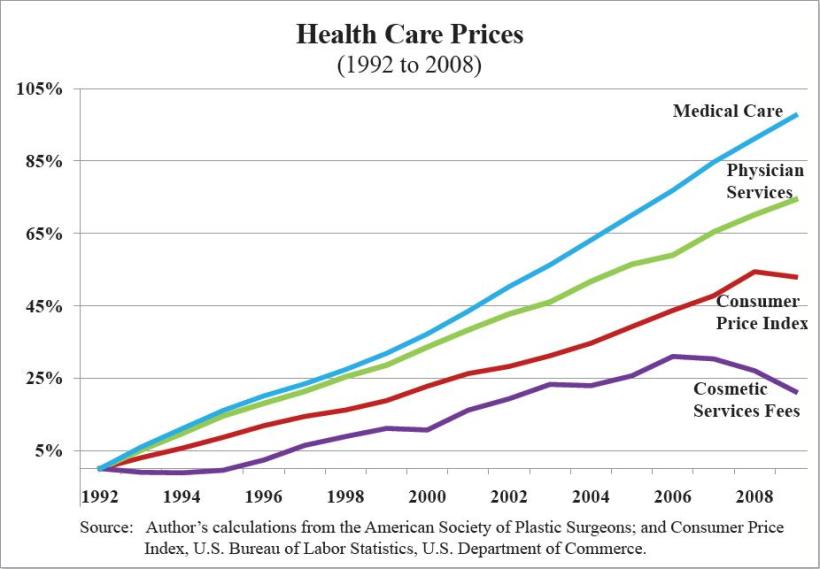
He feels any negotiations with the health service should start with healthcare economics.

health-care-prices

By proving that costs will be cut either by efficiency savings or reduction of demand you can engage cash-strapped health services.

Apposite capital’s lifteime investments tend to be in larger companies who are already disrupting in health.

The best place to get seed capital is from rich friends/relatives. Then angel investors. If you choose the right angel you will do well. However, if you get a ‘bad’ angel they won’t be able to help you so much. Then next would be family offices. Grants and VCT’s – they see so many ideas they can help you refine your idea and decide whether or not it is worth pursuing.

The key for VC’s is growth. If you get a business up and running in a high growth sector a VC firm will be interested because even if the investment just keeps up there will ultimately be a good return on the investment. That is the biggest key for a VC firm and it is why the investments they make are so large.