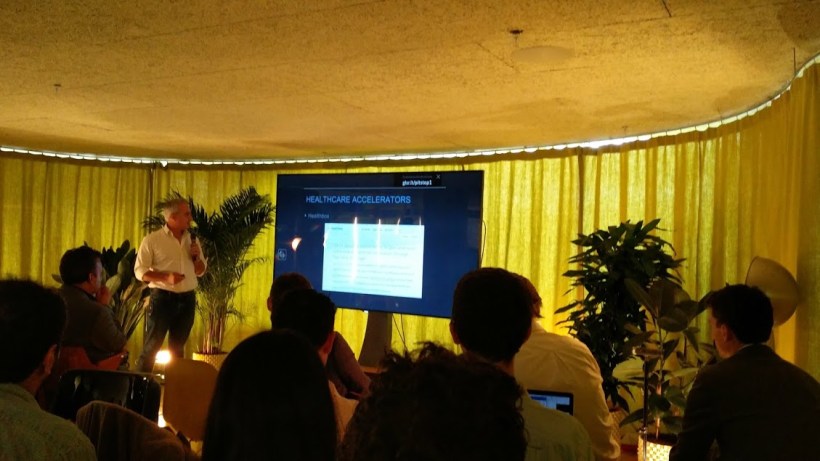
Toby Stone @theonlytoby explains accelerators #NHSClinEnt

Toby Stone just explains the what, how and when of accelerators.

img_20160924_132820

In a nutshell they should be a good fit for your business before you join one. You shouldn’t do one if your main need is simply capital. They may take equity or some other parallel. They provide you with mentors who have been through it before. Ideally this mentor and your investors should have specific knowledge but also general knowledge that you don’t have and can benefit from.

An accelerator like an investor is way more than just the money and you should spend time trying to find a good fit. There are some specialised ones.

SeedDB is a great site that lists them all but they are constantly changing. There are some more specialised ones like Healthbox and TechStars

A note on Crowdfunding: Seedrs will manage the crowfuding investors for you, Crowdcube won’t.

One of the best ways to fill your funding round is to use different platforms at different times to lure in different kinds of investors at the right times. For instance Kickstarter is really useful to raise awareness if you have a hardware product. Then when, your round is filling up it gives you momentum and clout when talking to angels, however, this is only one example and every different situation will require a different strategy.

Thanks Toby.


John Spindler @capenterprise on the Lean Startup Method: Part 2 – The Customer. @ #NHSClinEnt

‘Make something people want’ – Paul Graham, Y Combinator

Avoid wasting too much time trying to change the ‘stuck’ middle who don’t want to innovate because they are very good at using the current system. Are your people your assets or your problem?

Before building your business ask: What problem would someone else solve for me?

Another thought: The number of secrets in the world is roughly equivalent to the number of startups we need.

How did the companies that are currently successful scale. When you scale big you win even if your product is inferior. Unless you can bring 10* value you are unlikely to be able to displace an incumbent. (As per Peter Thiel).

Design Thinking: He would thoroughly recommend we all do Stanford’s online course on design thinking (8-10 hours). Emphasise, define, ideate, prototype, test. Do it in groups if you can. Great course

‘Kick Ass’ products have evidence that they solve a customers problem in a big market. Focus on the early adopters. People you can beta test with. Commit 5 people. They need to know they are aren’t buying a perfect solution.

They are trying to find a home made solution. They want you to succeed, they will give you their time and honest feedback and you have a relationship of trust. Your mum is not one of these first customers!

Do you know the demographic? Needs and goals? Problems that need solving, Present behaviours? How do they go about solving those problems? Reference group? The behaviours and the psychology are key.

BJ Fogg. Head of behavioural theory at Stanford. B=mat. B=behaviours, m=motivation, a=pre-acquired ability, t=triggers (we are all contextual. We need external triggers to get us to change our behaviour. Every product is a behaviour change. Activation threshold affected by these three things, the triggers have to be enough to get them over the threshold.

fogg-behavior-model

Source: B.Fogg (Stanford) Site as per diagram.

Can you make something better than it already is, make something simpler. In an ideal world how would this problem be solved. Better, Simpler or emerging.

John suggests we build 5 actual profiles of people. The more specific the better. Motivation, Habit , Income, Age, Location, Status, Backstory.

Understand the full use-case lifecycle.

You need a hipster (domain insight), hacker (builder) and hustler (the first two work for him for free!).

Source: Capital Enterprise – John Spindlercap-enterprise-full-case-use-scenario

What do these personas do when ‘triggered?’

Entrepreneurship is a career. Startups are risky experiments. You don’t have to experiment full time. Start today with what you have.

Suggested reading: Moms test by Rob Fitzpatrick, Running Lean by Ash Maurya and Lean Startup by Eric Ries.

#NHSclinent. John Spindler @capenterprise talks about lean startup methodology – Part 1

Brilliant start to the clinical entrepreneur programme. @Tonyyoung and @theonlytoby introduce the programme (below)

img_20160924_094759

Building a culture of entrepreneurial strength should be at the heart of what we are doing.

John Spindler @capenterprise – Lean Startup

Why bother starting a lifestyle business if you are a doctor. You have so much value and you want to share that with the world not just make your life easier. you don’t want a checklist business!

‘Big will not beat small anymore. The fast will beat the slow’ – Rupert Murdoch. Even he is aware of it.

Where can your business be in 12 weeks?

‘There are hidden gun’s in peoples garages which contain bullets with other companies names on them.’

‘Think big, act small, fail fast, learn rapidly’ – Eric Ries

methodology_innovation

As an investor, John Spindler finds the lack of background research by entrepreneurs to be one of the most commonly encountered frustrating problems.

2 columns:

Fact column- 2-3 facts you KNOW about what you about about do with this business.

Second column- Hypothesis. What things do I need to know to build this thing?

What is your OPPORTUNITY HYPOTHESIS. Build, Measure, Learn. Call it a project rather than a business because it is easier to fail fast. Like the psychology of this.

Experimental stage, metrics, evaluation leads to excellent execution.

startup

Don’t build something nobody wants!

3 types of advice: validated and negative (in 8 weeks you can test it and see if it works. Good or bad it will help)

95% of advice is useless in the next 8 weeks. Shelve it because it’s useless.

Lean is just about organising the chaos, reducing waste and risk, providing more learning and a common language. IF your core assumption is wrong you need to test that FIRST. Then you will save yourself a lot of time.

It’s a common language. There is jargon and as soon as you learn it you can communicate with others – be ‘in the club’ as it were.

If you are going to build do a lot of thinking. Then build the thing that teaches you what you need to learn.

The number one thing an investor will look at is the team. If you can convince a quality person to join you that is a sign of successfulness. If you can recruit a quality army this is your number 1 asset!  What quality of ARMY can you recruit? Investors will care about this more than anything else as it is the biggest determinant of success.

Get OTHERS to validate your product. Your own validation is not that valuable but multiple external validations are.

A good hypothesis is simple & clear, written as a statement, establishes participants (who), variables (what’s involved) and prediction of an outcome (evidence).

The Pepsi Challenge type scenario is NOT the right first validation exercise. You have to assume that the first answer is wrong. Ask 5 why’s eventually & you might get to the nub of it. AVOID CONFIRMATION BIAS like the plague.

Most people are NOT early adopters in ANYTHING. Most people have habits that are very hard to break.

MVP is not a crappy version of the product. It is a prototype. Consierge MVP is legitimate. It can be a simple landing page, it can be a proof of concept, it can be something for people to engage with, it can be a paper prototype, a pitch, fake demo video, or something to help a developer to understand. It is just a way to answer the questions you need to answer.

minimum-viable-product-2-848x458

Consierge means it is not scalable. It’s just there to allow you to learn. If your hypothesis is circular then its not a hypothesis.

Key assumptions: At least several other people are working on the same thing right now. How you think this your business idea will work is probably wrong. Your main job is to learn faster than the competitors. That is why the team is the key. It is the process and the people that win NOT the product itself.

The market is not stable and anyone who doesn’t keep moving forward will fall behind.

Call it a project, give it a name, sell something, convince someone else to join, set a goal that will inspire you, live 6 months in the future, fall in love with the problem and not your solution. Follow Peter Thiel’s philosophy as per ‘Zero to One’ (find it on Amazon its a good book.)

Don’t call it a business because you will overprotect it. Call it a ‘project’. Get people to devote time to your thing.

There are two types of teams. Napoleon team – they will follow your every command. The best teams however are people who are smarter than you and can do things you can’t and you bring them on the journey with you. They don’t want to just be footsoldiers for your army.

Paul Graham- You need three things to be a successful entrepreneur – a great team, proof that customers want it and a willingness to do it with minimal money!

Then questions:

Do you invest in startups who don’t use lean methodology? Yes but its rarer. Sometimes people just get damn lucky and hit a home run of first base but its the exception rather than the rule and it might not be repeatable.

Then he talked about financing and how ‘founders fit’ and how investors look at these things. Do you have someone resourceful, someone who can do x and y. The team you build now might well not be the team that takes it to the next level. Identify the task in hand and see if the team members can get you there.

Funders and investors must fit. An investor should never distort the function of the startup because this is your task. You have the hands on the controls. They are investing in you!

Thanks John.
Finally: My two favourites from Expo 2016

My Clinical Outcomes

As someone who was the first doctorpreneur I ever discovered and who is a genuine and honest guy. Tim Williams has helped me more than he realises at an early stage on my doctorpreneur journey. What he is doing with @myclinoutcomes is great and we need more of it. It’s only by measuring the metrics of health that we can feed back into the learning cycle and make sure we don’t waste effort (ie. think lean) but more importantly patients will be protected from harm. (Tim to the left). Lorie his analyst and Joe Mcdonald chair of the clinical CCIO network are to the right.

I want great care

In the middle is Neil Bacon. I had heard of Neil before and have even once for some reason been asked if I had founded doctors.org.uk! (apparently many have claimed to be the founder. If you are one of the other founders I would love to hear from you…)

Talking to Neil was like talking to an even more vivacious and talkative me! His passion for what he is doing shines through and I have to say what he is doing with Iwantgreatcare.org is fantastic. I signed up straight away and so should all doctors. What you might think is just a ‘trip advisor’ or ‘checkatrade’ for Healthcare is actually a powerful feedback and analytics platform that enhances patient safety and outcomes. If you use it you WILL be helping your patients!!!

That’s it from me from NHS EXPO 2016. It’s been a great conference. Next up GIANT health con November!

Matt

More interesting tech at NHS Expo 2016

Lifelight

This is a really cool sensor system that is brilliant ad it is so simple yet massively effective. The founder Lawrence, is a legend and is doing great things via Southamptons catalyst programme. Watch this space! If I had money to invest I would invested in this.

XPERYE

Used by Shafi Ahmed in London this is a neat peice of kit using Google glass to transmit the wearers vision to a computer. The images can then be annotated or altered to be used in teaching etc. With the Google glass version 1 no longer available and a time lag for its successor and at £300/month this is potentially a very nice little training tool in the right context at the moment. It is certainly fun to play with.

PA consulting’s offerings 

PA consulting have introduced these products at the expo. This is a new probe for measuring Barretts oesophagus through the scope. It was next to the cytosponge but for some reason that had disappeared today. Both very promising innovations in my specialty (gastro) for Barrett’s surveillance.

TEDx NHS

TED has finally landed in the NHS. This proves people are gradually catching the vision. Bring it on…!

New tools to market at Expo 2016

Creavo
This beauty could revolutionise the admission of chest pain. It can more accurately diagnose ACS AND unstable angina in just 3 minutes in the ED. It’s currently going through studies to validate it but I can see it being very successful as it’s price point is only around £100k and it could save NHS trusts millions.

Creavomedtech only just formed. Based in Leeds with a strong support structure, good corporate backing and strong technical expertise linked to the university I think this is one to watch!

Early Sense

This platform by early sense could be useful for patients with dementia as a way to monitor them remotely. However, there are lots of cheaper bed alarms. At £3500 a bed I think this products USP is the monitoring rather than anything else.

Vanguard

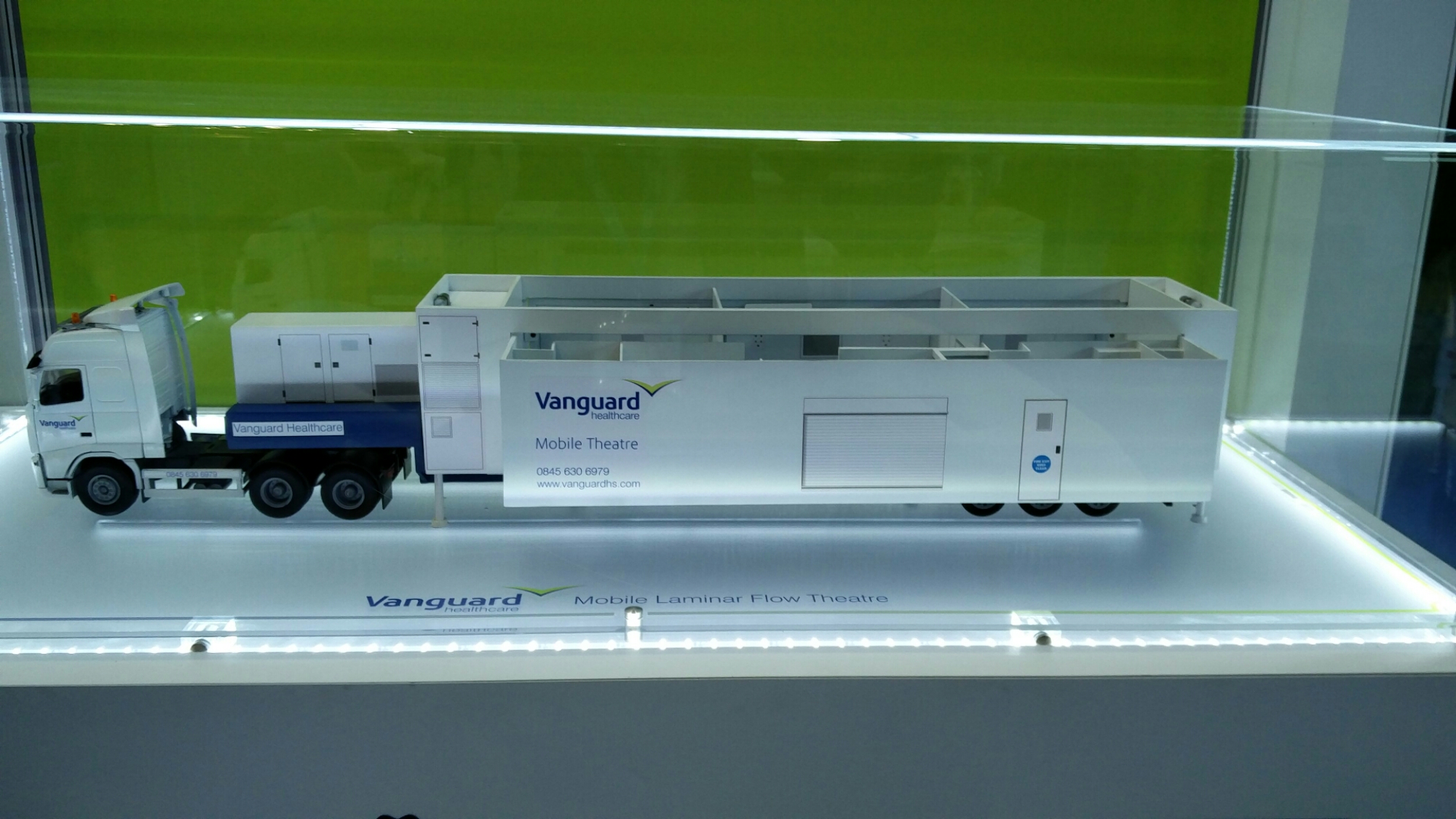
This is not a new technology but it’s beginning to scale. Portable theatres and endoscopy units could help some hospitals who have capacity issues. This polentally also has a role in major incident management.

Centrihealth

This is a context based health platform. More advanced than a normal EPR (electronic patient record) system. This uses AI to filter the data and produce a useful record. This tool is FANTASTIC, but they have not yet broken into the NHS because their marketing strategy is wrong. It took me ages to get what they are actually doing and I think thats why they are struggling here. THIS IS A PATIENT SAFETY TOOL NOT A ‘CONTEXTUALISATION’ ONE. If you read this then get in contact because I think I can help you.

There are many more innovative solutions here but these ones caught my eye. To see more visit the EXPO website.

Why Healthcare is becoming so Unhealthy

physician-stress-causes-and-dealing

The NHS

I am a medical doctor who has been practicing for 6 years in the British NHS.

The NHS is a great institution. It has brought help to anyone at their point of need for over 68 years. Founded by Aneurin Bevan on 5th July 1948. Built as an instutition by the people, for the people it has certainly been (historically anyway) far from the insurance based systems of the US or the more industrial-type approaches of some other nations towards health. Quite rightly it is something that British people remain proud of.

Acutely Diseased?

However, it was founded at a time when acute illness was more common than chronic disease. It was also founded on a flawed assumption that if you made everyone better then the population as a whole would be healthy. This is unfortunately only true in part; as we are now painfully aware — if you make people better from their acute illness then eventually they live long enough to develop chronic diseases which are not so easily ‘cured’.

You see hospitals are not (and never were) really built for managing chronic diseases. As soon as you take away the specialist hospital input on discharge that person is still left with the problem but has to deal with it largely alone. At this point a hospital building is of limited use.

What, so doctors aren’t special anymore?

Essentially in a word, no. (There you go I have done it). Back when there was no alternative people just accepted it. However, a second key change happened in 1989 which sowed the seed which would eventually change that. When Tim Berners-Lee (disagree with me if you want to) came up with the world wide web the possibilties this would lead to were unknown. Still 27 years on they are largely unrealised, but in 1998 Google made the web searchable (again feel free to disagree); only now are we starting to feel the full effects of this seizmic change.

What this primarily means is that information is now cheap and free (as evidenced by things like books which fortunately for Amazon they foresaw and now sell us everything else instead). It is not just bookshops and libraries who were affected by this seizmic change. Professionals and businesses of all kinds are continuing to see the value of their ‘knowledge’ diminish while their clients knowledge continues to increase and ‘unqualified’ competition stiffen.

The responses to this have been various but in many ways dysfunctional. By focussing even harder on what worked in the past many professionals of all shades have literally driven themselves out of business (look at some taxi firms and Uber for instance).

In Medicine the reaction has been very mixed. Whilst I welcome some recent intiatives to improve patient engagement and make services more patient focussed, these efforts have frequently yielded mediocre results as they are actually glorified customer-focussed data gathering exercises rather than change engines. Such a missed opportunity.

Regulations, Guidelines, Procedures, Repeat

In addition to this in my short 6 years of medicine I have witnessed a stifling increase in regulation to compensate for poor performance. This has largely consisted in the rise of a very rigid system of regulations and checks. This has had the effect of improving the very poor performers at the expense of the best (as in teaching and other public services).

No organisation can really excel if it is constantly trying to meet (sometimes arbitrary) targets. (At this point I must make clear that there are lot of hospitals doing a very good job despite the overwhelming bureaucracy – (I know because I have worked at some of them). However, this doesn’t change the fact that the good is the enemy of the best 1; and you will never get to the best if your efforts are just focussed on meeting targets (WHAT you do?) and improving processes (HOW you do it?). The key is WHY? 2

Why is Why so important?

And this is the problem as I see it: As a country we have lost our healthcare WHY?! The reasons are many but we have become defined by WHAT we do and HOW we do it rather than WHY we do it. If we really cared about WHY we do it then we would do it differently because our still largely acute-illness focussed, pre-internet model of care isn’t working that well anymore for the majority of patients with chronic diseases they have looked up on the internet.

It’s time to stop paying lip service to patient-centered (particularly outpatient) care and start practicing it. You see what we primarily don’t need in my country is a insurance driven model of healthcare, rationing, more doctors (although this would be a nice luxury), more nurses (again would be nice but is not the key) or more fads of management, structure, technology and applications. Instead we need to rediscover our WHY and with it our empathy, compassion, patient-centeredness, team-spiritedness and drive to continually make things better beyond the point where it is about money.

Theirin lies the future of healthcare for anyone who wants to catch the vision. I predict it will be 20 years from now before this really starts to catch on.

If you want to join me in pursuing this? Connect with me on LinkedIn or Follow me on Twitter (I’m a human I prefer connections). If it is not an automessage I will read it. (unless its abusive in which case I won’t.)

References:

1. Jim Collins: Good to Great.

2. Simon Sinek: Start with Why.

Novel Imagers / VR kit

In the last couple of weeks I have been contacted by several people who have designed various gadgets for Medical VR/interaction. They are iridescent imaging, VIZR, D-EYE and Gesturetek. 

First up Iridescent Imaging 

Mitch Downey founded this company to create fantastic small and life-size VR projections.m  see more images here: http://iridescentimaging.com  The technology looks fantastic but as you might expect it isn’t cheap. I can really see how these might be useful for virtual clinics, particularly in specialties where walking in front of the doctor is a key part of the exam: ie. Rheumatology / Neurology. However, a remarkable product needs a great website and this is something that needs a bit of work. 

Then there is D-EYE

This thing looks excellent. It can effectively enable an ophthalmologist to diagnose a child remotely in another country using just their smartphone but more likely it will be a great clinic application. To be honest I want one on my emergency unit as it looks so easy to use but again these things are new and therefore costly. https://www.d-eyecare.com

Next up VIZR

This is more like a clinician assistant (like Google glass) they feel their user interface and information is more up to date. It looks like a smart gadget but as the video on the site demonstrates it is not entirely unobtrusive to the patient looking at the doctor http://www.vizrtech.com

Time will tell whether there will be enough uptake. My feeling is that unfortunately for this device we are still several years away from IoT and the effects of Big Data having their full impact to help this device work. 

Finally we have http://www.gesturetekhealth.com

These guys are doing something a bit different. Trying to get physical controls to work for rehab /those with disabilities. Unfortunately the website is dire which is a shame as they have some really cool products like Irex-an upper and lower extremity training system. 

It looks like they are doing a great work in their niche. 

Note I have just started a medium blog as well and plan to integrate them later so watch this space. 

Some new wearables / healthtech

Firstly there is Ozmo https://www.ozmo.io a drink bottle that measures your fluid intake. Seems like a good idea as it can connect to a variety of different other wearables but weighing in at $70 it’s not cheap (especially as I have a habit of leaving these things behind). 

Next there is Heart-In http://heartin.net/heartin.html

Not a great website but looks interesting. Unfortunately, the product is not that different from lots of others and I can’t work out how it is differentiated. 

Finally there is pulmaware by strados Labs. http://www.stradoslabsllc.com. 

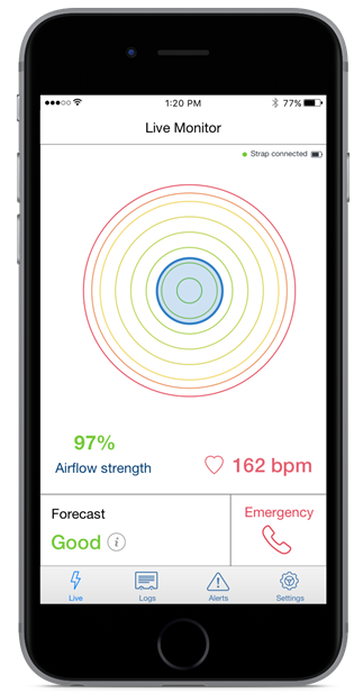
This one looks the most interesting and unique of the lot. The website is clear and the product something that most asthma patients will understand.

 This one definitely gets my pick if the week and if I had lung disease I would strongly consider getting it. 

Telemedicine: Is it the future? 

​What surprises me most about the article below is the so far low uptake of Telemedicine. The applications for this are potentially vast but due to various restrictions particularly surrounding the reluctance of US health insurers to fund such consultations, the general uptake is still low. 

Several companies in the UK are trying to build these primary care alternatives now (Dr Now, Babylon etc) and it would appear that there is public desire for these things. However, they face lots of challenges. 

Firstly patients are offered more comprehensive services in the NHS even if there is a delay to access them; tests are very difficult to organise at home over the Internet; Patients can’t be fully examined and fundamentally there is a major shortage of GPs. This means that capacity is unlikely to ever be able to meet demand in a cost efficient way without adopting alternative models of triage. 
These challenges can all be overcome in time but the fundamental test will be what patients actually want. As physicians we think we know the answer to this question but have we really asked the right questions? 

Link: http://www.wsj.com/articles/how-telemedicine-is-transforming-health-care-1466993402